


Antiquities Coalition Reveals the 2026 Looks vs. Loot
May 4, 2026
The Met says “Fashion is Art,” but is protecting art still in fashion?
On the first Monday in May, the steps of The Metropolitan Museum of Art (Met) serve as a pedestal for celebrities and cultural tastemakers, draped in the latest creations from the leading names in fashion. This year’s dress-code, “Fashion is Art,” fittingly celebrates the museum’s role as a steward of some of the world’s most significant artistic and cultural treasures.
And yet, behind many of the masterpieces inspiring tonight’s looks are histories of colonial plunder, armed conflict, and organized crime.
The International Consortium of Investigative Journalists has identified more than 1,000 objects in the Met’s catalog tied to alleged traffickers and looters, few of which the museum has publicly addressed. Art is in fashion. Is accountability?
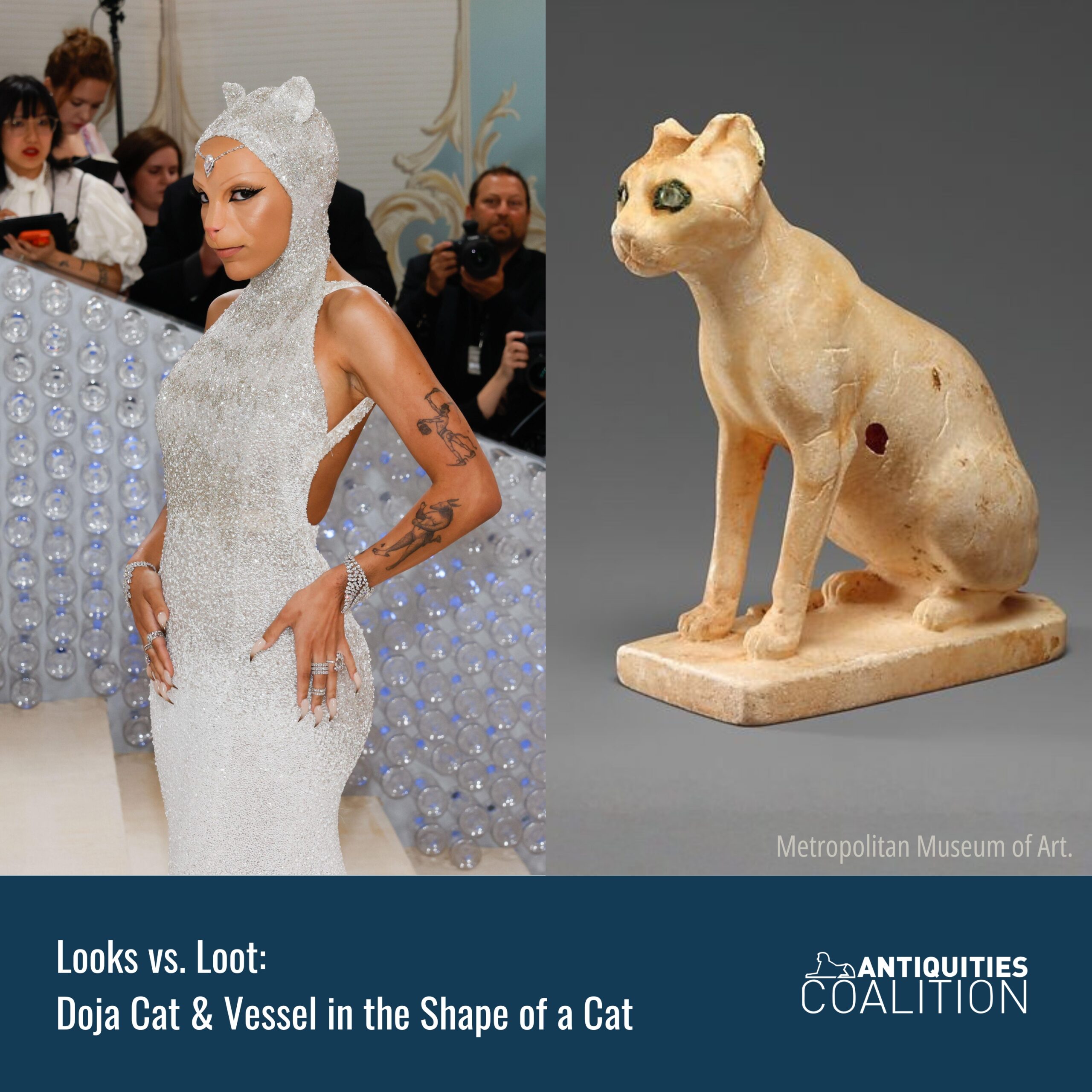
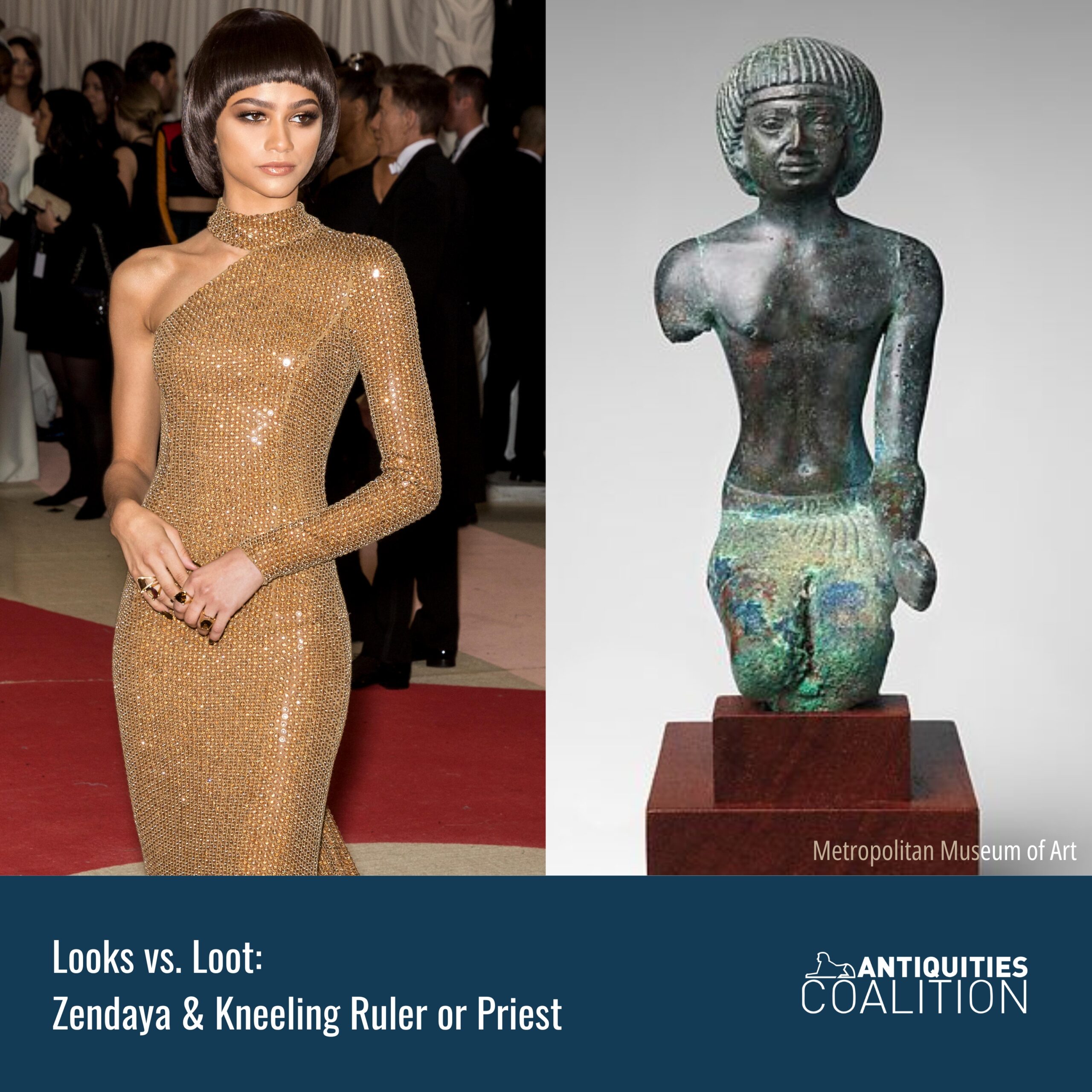
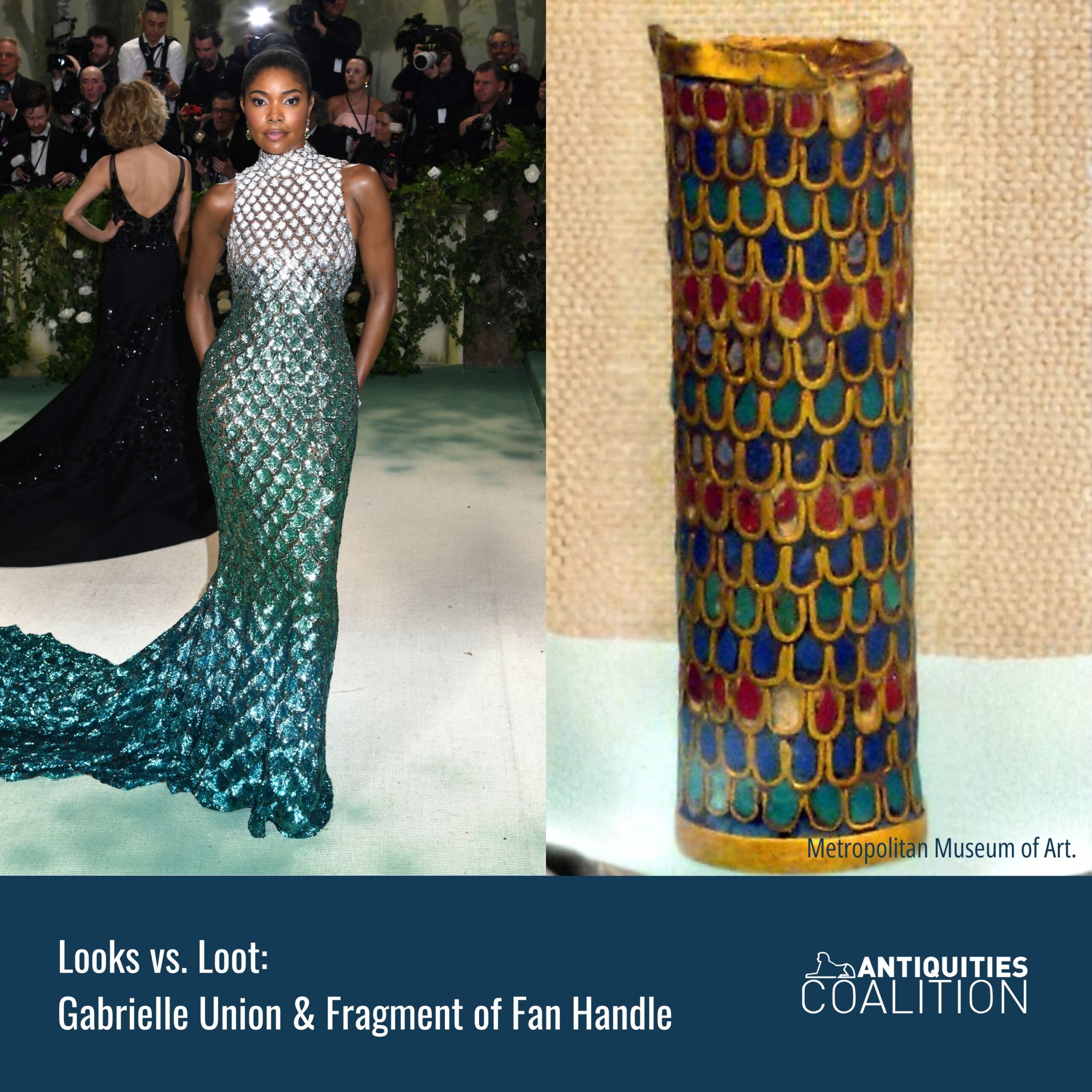
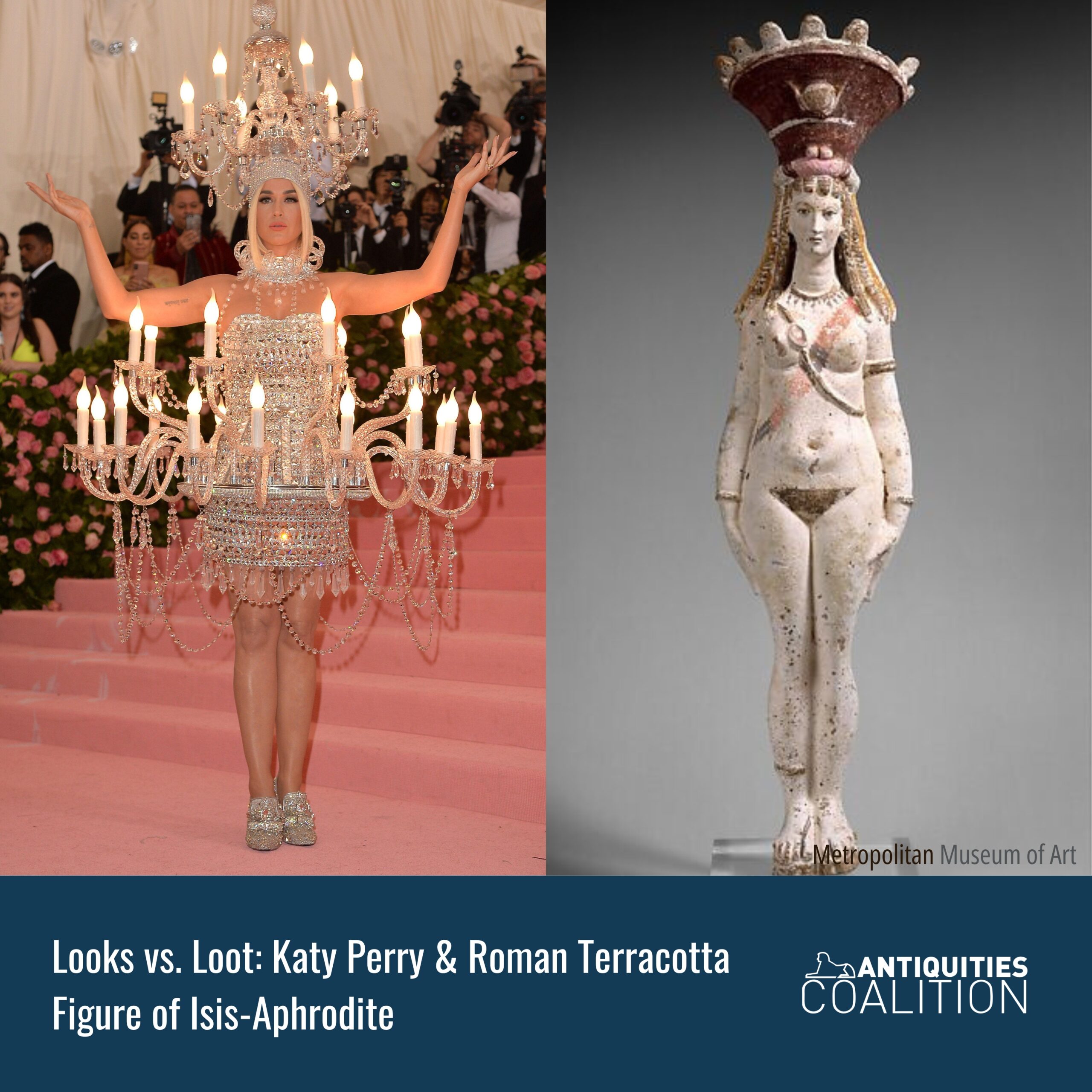
Against this backdrop, the Antiquities Coalition launches its fourth annual Looks vs. Loot campaign, in which we pair red-carpet looks with repatriated antiquities from the Met. Over the past year, the museum has continued to return contested objects, publicly announcing restitutions to countries including Greece, Italy, Spain, and Türkiye.
In several of these cases, the Met has paired restitution with partnership. In September 2025, for example, the museum announced the return of a Sumerian Vessel Stand with Ibex, dating to circa 2600–2350 BCE, following in-house provenance research that determined it belonged to the Republic of Iraq. Alongside a repatriation ceremony, the Met and Iraq embarked on a collaborative research project, presenting restitution as an opportunity for shared international scholarship.
However, the Met faces ongoing scrutiny over objects in its collection associated with alleged traffickers or with unclear provenance. The 2025 reopening of the Michael C. Rockefeller Wing, housing the Met’s collections from Africa, the ancient Americas, and Oceania, has prompted wider public discourse over the museum’s collections and curation, with some critics viewing the discussions of provenance research as deflective or performative.
The glamour of the Met Gala risks overshadowing the red flags the museum still hasn’t addressed. Transparency remains an ongoing challenge: public information on restituted objects is minimal and proves difficult to locate on the museum’s website. By disclosing restitution information and publishing regular data, the museum could better show that its commitment to addressing its collection is being matched by meaningful and proactive action.
Step aside, stars. It’s time to put institutional accountability center-stage.